

By Josh Pettingill, MBA, MS, MSCC
Executive Summary
In 2024, FWA members secured an average of $9,349 more per settlement than non-members – and earned $2,922 more in attorney fees per case. This analysis of 46,440 resolved Florida workers’ compensation cases from 2023 and 2024 reveals that FWA membership delivers measurable advantages across every outcome metric. To stay competitive in a shrinking system, claimant attorneys must combine the collective strength of FWA membership with the use of data and technology. Those who embrace both are positioning themselves and their clients for long-term success.
Key Findings At A Glance
- Average settlement: $61,182 (FWA members) vs $51,833 (non-members) in 2024
- Median settlement: $27,400 (FWA members) vs $24,900 (non-members) in 2024
- Average attorney fee: $14,609 (FWA members) vs $11,687 (non-members) in 2024
- Data source: 46,440 resolved cases across 2023-2024
This analysis considers 26,558 resolved Florida workers compensation cases from 2024 and 19,882 settled cases from 2023, compiled directly from the Judge of Compensation Claims’ state adjudication records and settlement data processed through the Winsom Settlements platform. All financial figures exclude zero-value settlement amount entries and reflect actual settled outcomes.
The Devil’s Greatest Trick
“The greatest trick the Devil ever pulled was convincing the world he didn’t exist.” – Keyser Söze
For decades, insurance carriers have been pulling off their own version of this con. While claimant attorneys walked into settlement negotiations armed with experience and instinct, carriers sat across the table with something far more powerful: data.
The insurance industry has been quietly sharing aggregated settlement data through proprietary databases and exchanges under the guise of bringing down insurance rates. Behind the scenes, carriers have built internal analytics programs that track every claim, not to ensure fairness, but to systematically drive down the value of workers’ compensation cases.
But here is the good news. FWA members are winning anyway.
FWA Members Outperform: Higher Settlements for Injured Workers
One of the most important measures of any workers’ compensation attorney’s effectiveness is simple: how much are you getting for your clients?
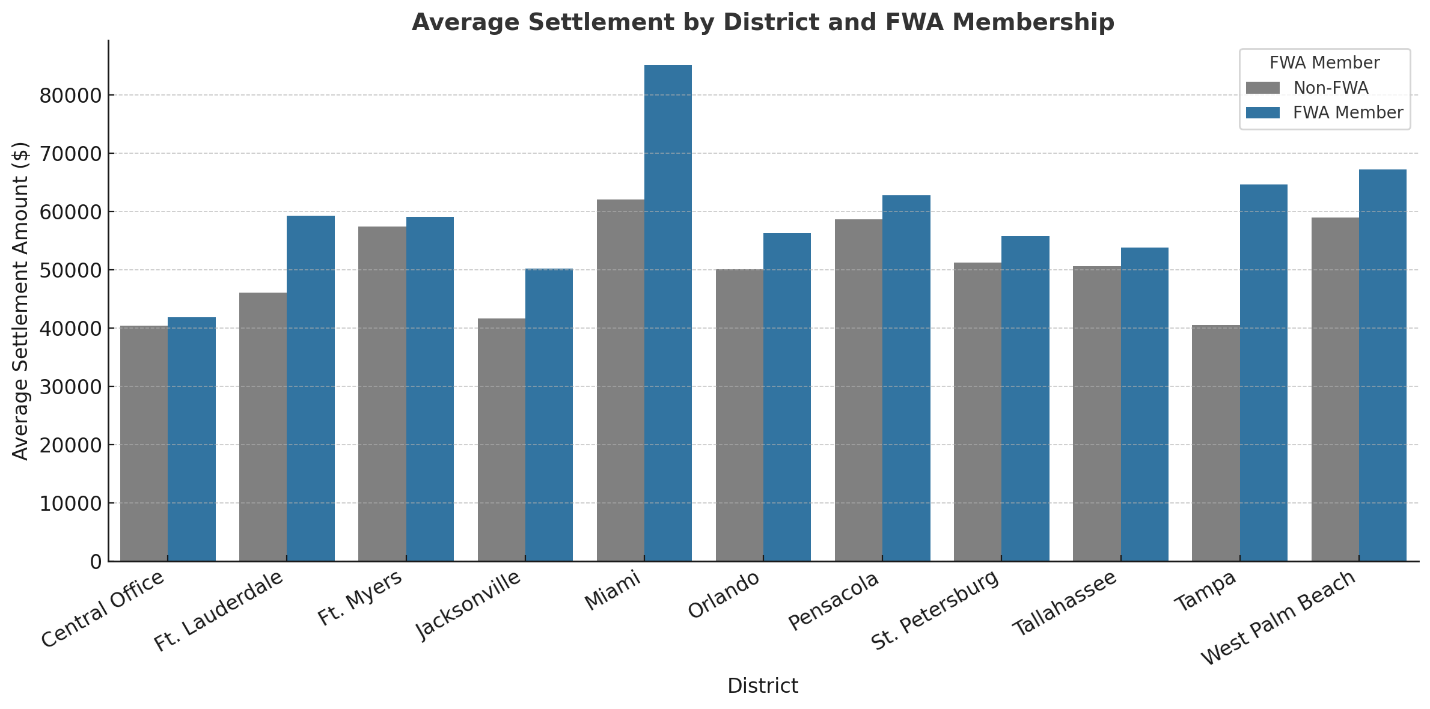
In 2023, FWA members achieved an average settlement of $58,300 compared to $49,800 for non-members, an advantage of nearly $8,500 per case. In 2024, FWA members secured an average settlement of $61,182 compared to $51,833 for non-members, a difference of $9,349 per case. That is not marginal improvement; that is nearly $10,000 more going into the pockets of injured workers. Over 100 cases, that is almost a million dollars more in compensation for the people who need it most.
The median settlement tells an equally compelling story: $27,400 for FWA members versus $24,900 for non-members. Even at the midpoint, where half of all cases fall, FWA members are securing $2,500 more per settlement. For a worker struggling with medical bills and lost wages, every dollar matters.
Better Outcomes for Clients, Better Outcomes for Attorneys
FWA members’ higher settlements also reflect more complex case handling and stronger negotiating positions. In 2024, average attorney fees were $14,609 for FWA members compared to $11,687 for non-members. The median fee advantage is even more pronounced: $7,500 versus $5,820, a difference of $1,680 at the midpoint.
These are not just numbers on a spreadsheet. This is revenue that keeps your practice running, pays your staff, and allows you to take on the next case. The chart below is evidence of stronger negotiating positions and better execution.
Why FWA Members Outperform
The data tells a clear story but understanding why FWA members consistently outperform reveals something even more important: the power of collective strength, shared intelligence, and relentless commitment to excellence.
FWA’s strength has always been rooted in exceptional leadership, deep litigation experience, meaningful collaboration, and ongoing education. These are not abstract values. They translate directly into better case outcomes.
FWA members have access to resources that foster collaboration and knowledge sharing: a robust listserv for real-time communication, annual conferences that bring together the state’s top claimant attorneys, and member-only webinars on evolving legal strategies and regulatory changes. These platforms create opportunities for experienced practitioners to share insights, discuss emerging trends, and adapt to an increasingly challenging claims environment. This is not luck. This is a collective advantage built on decades of knowledge sharing and mutual support.
The annual FWA conference brings together the state’s most successful claimant attorneys, experts and distinguished lecturers to share what is working, what is not, and how to adapt to an increasingly hostile claims environment. Webinars on Medicare Set Asides, fee disputes, and appellate strategy ensure members stay ahead of regulatory changes and procedural shifts. The listserv functions as a 24/7 brain trust where members elevate each other’s practice in real time.
FWA members fight tirelessly for their clients, often without the same level of data intelligence carriers have relied on for years. But that imbalance is finally closing.
The Power of Data: Turning Intelligence into Results
Carriers have long relied on data to guide their settlement strategy while claimant attorneys had little or no access to the same information. That imbalance is finally starting to change.
Only a handful of FWA attorneys have begun using real-time settlement analytics to prepare for mediation, hearings and negotiations, but the results have already been significant. These early adopters are now able to see what carriers have always known: how venue, injury type, employer, carrier, and opposing counsel influence case value.
With this intelligence, attorneys can now walk into negotiations knowing:
- What similar injuries and body parts have settled for in that venue
- Which carriers and employers settle higher or lower
- What attorney fee percentages and hourly rates judges have historically approved
This marks an important turning point for claimant advocacy. Data-driven insights are no longer limited to the defense side. A handful of FWA members are already using these tools and the results have been tremendous.
Data in Action: How FWA Members Are Already Using Settlement Intelligence
Use Case #1 – Establishing Community Standards for Fee Disputes
A plaintiff attorney recently needed to demonstrate that a requested hourly rate was consistent with prevailing community standards. The opposing defense attorney argued the rate was excessive.
Using settlement data, we located every case in which that same defense attorney had previously agreed to pay plaintiff counsel hourly fees. Within minutes, the search produced a detailed record of resolved carrier paid fee awards, including hours billed, hourly rates, and the presiding judges across those matters.
The data revealed a consistent pattern: in numerous prior cases, the defense attorney had stipulated to or settled fee awards at rates equal to or greater than the rate now being disputed, often before the very same judges.
The objective data quickly resolved what could have been a protracted dispute. Instead of relying on general market testimony, the attorney presented empirical proof grounded in case history, using the defense’s own track record to confirm the reasonableness of the fee request.
Use Case #2 – Rapid Economic Exposure Analysis
An attorney needed a reliable projection of future medical exposure to evaluate settlement value on a rush basis, as mediation was scheduled the next day. Using structured data templates and automation tools, we calculated the full lifetime medical and indemnity exposure in less than twenty-four hours.
The analysis incorporated the claimant’s CMS-approved Medicare set aside, other defensible Medicare covered services that should have been included in the MSA, and all non-Medicare allowable costs. We also provided the attorney with present value calculations of potential PTD exposure to capture the full indemnity impact.
This comprehensive economic case assessment ensured the attorney walked into mediation with complete clarity on total case value – from settlement strategy to long-term financial security.
The Path Forward
The greatest trick carriers ever pulled was convincing us we could not compete with their data. That trick is over.
FWA members are not outperforming by accident. They are outperforming by design – through collective strength, shared knowledge, and increasingly, through access to the same data intelligence that carriers have used for years.
For those ready to maximize every advantage, the tools exist. The data is available. The community is waiting. The only question is whether you are ready to join the attorneys who are not just surviving in a shrinking system but dominating it.
Together, we can ensure every FWA member negotiates from a position of strength and delivers measurable value for injured workers. This is only the beginning.
About the Author & Resources
These automation systems and data resources are available through Winsom Settlements as part of structured settlement services, typically treated as a case cost with no out-of-pocket expense to the attorney. There is never a cost to involve us in the structured settlement component of a case – we are compensated directly by the annuity company that effectuates the structured settlement.
Josh Pettingill is an FWA Platinum Partner and structured settlement consultant who works exclusively with claimant attorneys specializing in workers’ compensation cases and Medicare Set Aside arrangements. He helps attorneys maximize settlement value and optimize recoveries using data-driven insights. Josh is also a Certified Medicare Set Aside Consultant (MSCC).
For a free case review, mediation support, or to discuss settlement data intelligence tools, contact Josh at 321-291-1818 or josh@winsomsettlements.com.
Appendix: Study Limitations and Future Research
This analysis is based on publicly available adjudication and settlement data from the Florida Judge of Compensation Claims, matched against verified FWA membership records. While the dataset is comprehensive, several limitations should be noted. Individual case characteristics such as injury severity, attorney experience, claimant demographics, and carrier-specific litigation strategies were not controlled for, which may influence outcomes. Additionally, this study captures historical performance but does not imply causation between FWA membership and higher settlements or fees.
Future research should expand beyond annual outcomes to examine multi-year trends, case complexity levels, and the impact of emerging data tools on litigation results. A more granular analysis of carrier behavior, judicial variation, and attorney practice patterns could further illuminate where strategic advantages exist and how they evolve over time.